
Scrap vs Sell: What Gets You More for Your Damaged Car
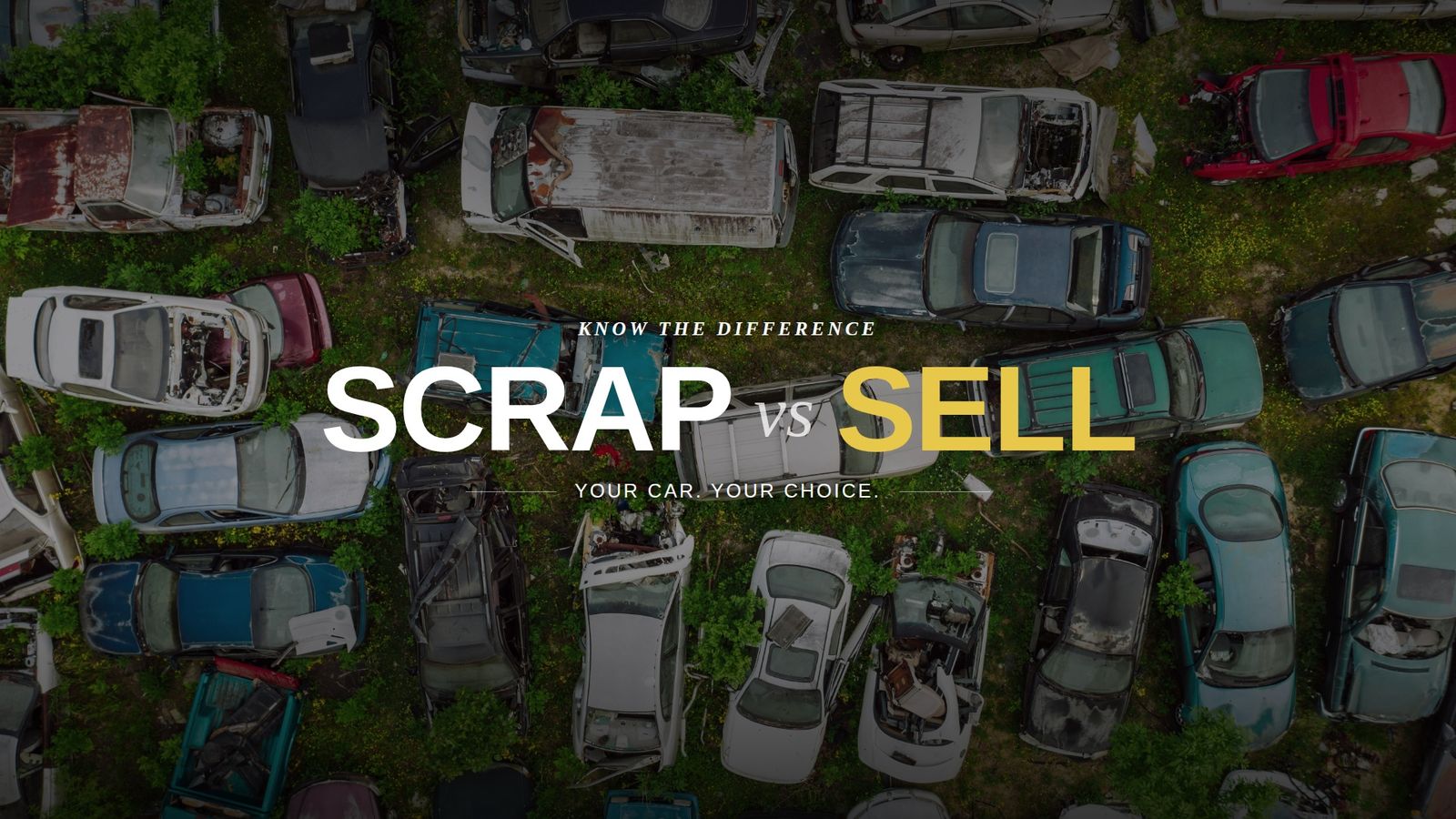
If your car has been damaged, written off, or just will not start anymore, you are probably weighing up the same question most owners face: is it better to sell it, or just scrap it and be done with it?
It is a fair question. And the answer can make a bigger difference than most people expect.
At Second Gears, cars that owners assume are only worth scrap regularly end up selling for significantly more. In many cases, scrapping might get you a few hundred pounds — while selling to the right buyer could return considerably more. With strong demand for used parts and repairable vehicles across the UK in 2026, it is always worth understanding what you actually have before you make a decision you cannot reverse.
What selling your damaged car actually means
When you sell a damaged car, you are not limited to finding someone who wants to drive it. The buyers in this market look at your car in a completely different way, not as a finished product, but as an opportunity.
Dealers, breakers, rebuilders and export buyers are all active in this space, and they are each assessing your car for different things: valuable parts, a repair project, or a vehicle they can return to the road and resell. That is exactly how a platform like Second Gears works. Your car is seen by multiple buyers at once, which creates competition and can push the price up significantly compared to a single trade offer.
That means cars that do not start, have accident damage, or have been written off as Cat S or Cat N can still be worth considerably more than scrap value to the right buyer.
What scrapping your car actually means
Scrapping is the more straightforward route. Your car goes to an Authorised Treatment Facility (ATF), where it is broken down and recycled. You receive a Certificate of Destruction (CoD), which means the vehicle is officially off the road for good.
It is simple and quick, with very little to organise.
But there is a trade-off. Scrap prices are based almost entirely on the weight of the car and current metal prices which means it is almost always the lowest payout option. A few things worth knowing: you will not be paid in cash, as UK law requires payment by bank transfer or another traceable method, and you will need to notify the DVLA once the car has been disposed of.
Why selling usually gets you more in 2026
The used car market has shifted in ways that favour selling over scrapping for the majority of damaged vehicles.
Demand for used parts remains strong. With repair costs rising, more garages and independent mechanics are turning to second-hand components which increases the value of damaged vehicles even when they are not economical to repair as a whole. Repair costs rose 50% between 2019 and 2024 according to Thatcham Research, and that trend has continued to push buyers toward salvage stock.
Multiple buyers competing also makes a real difference. Instead of a single scrap quote tied to metal prices, a platform like Second Gears puts your car in front of numerous verified buyers simultaneously. That competition tends to produce better offers than any single-source route.
And Cat S and Cat N write-offs are not the dead-ends many owners assume. These vehicles are regularly repaired and returned to the road, or broken for parts, both of which make them genuinely valuable to the right buyer.
When scrapping makes sense
Scrapping is sometimes the right call. It is worth considering if:
The car has severe damage such as fire damage or major structural failure
Repair costs significantly exceed the car's value even as salvage
There is very limited demand for the make and model or its parts
The vehicle has multiple serious faults and is an older, low-value car
You can also scrap a car without an MOT, which is common for vehicles that are no longer roadworthy.
When selling makes more sense
In most other situations, selling will return more. It is usually the better option if:
The damage is not catastrophic — cosmetic, mechanical or light structural
The car could be repaired and returned to the road
It is a Cat S or Cat N write-off with known, documented damage
It is a relatively modern, popular or high-demand model
It is a non-runner but otherwise complete and undamaged
Even if it will not start, there is a strong chance a rebuilder, trader or breaker will want it, particularly when it is listed on a platform where multiple buyers can see it at the same time. Understanding how to price it correctly before listing makes a significant difference to the offers you receive.
Common questions
Can I sell a car that does not run?
Yes. Many buyers on Second Gears specifically look for non-runners and damaged vehicles. Rebuilders, mechanics and parts traders all actively source cars in this condition.
Is it better to scrap or sell a written-off car?
In most cases, selling will get you more money, particularly for Cat S and Cat N cars, which can be repaired and have real value to specialist buyers. The key is getting your car in front of the right audience rather than defaulting to a scrap quote.
Can I scrap a car without an MOT?
Yes. You can scrap a car without a valid MOT in the UK. The scrapyard will issue a Certificate of Destruction and you notify the DVLA once the car has been disposed of.
How Second Gears helps you avoid leaving money behind
The smartest move before scrapping any damaged car is to find out what a specialist buyer would actually pay. Scrap is the floor, not the ceiling and the gap between the two is often larger than owners expect.
Second Gears connects sellers of crash-damaged, written-off and non-running vehicles directly with verified trade buyers, dealers, rebuilders and parts specialists who are actively sourcing stock. Listing is free, there are no auction fees or commissions, and you stay in control of whether and when you sell.
Once a car is scrapped and a Certificate of Destruction is issued, that decision cannot be reversed. It takes a few minutes to list on Second Gears and find out what your car is actually worth first.
List your damaged car free on Second Gears before you commit to scrapping.
The bottom line
Scrapping is not a bad option, it is just one that is often chosen too quickly.
In most cases, selling a damaged car to the right buyer will return more than the scrap price, sometimes significantly more. The exception is when the damage is catastrophic, parts demand is low, or the car has very limited market appeal even to specialist buyers.
Before you decide, find out what yours is worth. Because more often than not, it is more than the scrapyard will offer.
Related reading:
Related Articles
What to Do in the First 24 Hours After a Car Accident in the UK
The moments after a car accident are disorienting. Even a minor collision leaves most drivers shaken, unsure what needs to happen and in what order. T...
SORN Explained, and Yes, You Can Sell a SORN Car
SORN Explained, and Yes, You Can Sell a SORN CarSORN, the Statutory Off Road Notification, is one of those DVLA terms that generates endless confusion...
Cat N Car Insurance: The Questions Everyone Asks After the Repair
Cat N Car Insurance: The Questions Everyone Asks After the RepairCat N cars have gone mainstream. With repair costs writing off lightly damaged cars i...